Booker-prize winning author, Bernardine Evaristo, has lent her voice to renewed calls for schools in England to offer more diverse literature texts on the curriculum. The first Black woman to win the Booker Prize for her novel, Girl, Woman, Other, Evaristo wrote as part of Lit in Colour campaign’s five-year progress report, stating that in 2025 it felt like “the tide [was] turning against inclusion”.
Lit in Colour’s campaign found that there had been some progress in diversifying the texts offered as part of the literature curriculum in England but that uptake in schools was still low. the report found that just 1.9% of GCSE pupils in England were found to be studying books by authors of colour, up from 0.7% five years ago, according to the report.
The report said that progress of diversification, however, is too slow, and that at the current pace of change it will be 2046 before 10% of students answer a question about a text by an author of colour in their English literature GCSE. By the same metrics, it will take until 2115 before 38% of pupils study a writer of colour in GCSE English literature, a figure that would be representative of the percentage of pupils in English schools from minority ethnic backgrounds, according to the Department for Education’s (DfE) most recent figures.
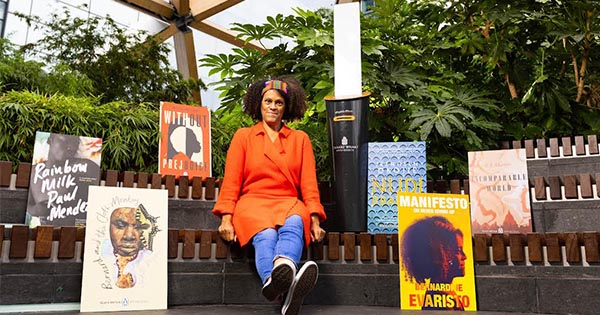
Bernardine Evaristo previously celebrated Black History Month as part of the ‘Black Britain Writing Back’ campaign.
Since Lit in Colour launched its campaign to improve diversity in the school curriculum in England five years ago, the percentage of GCSE English literature set texts by authors of colour has increased from 12% to 36%. In 2025 there were eight texts by authors of colour on exam board text lists, mostly of Black and south Asian heritage. Teachers in many schools, though, continue to stick to texts like JB Priestley’s An Inspector Calls, reportedly due to their greater familiarity of these texts, and a lack of resources to support the teaching of new texts and insufficient time for training.
In the foreword to Lit in Colour’s report, Evaristo explained that she welcomed the progress so far but worried that diversity was experiencing a step backwards. She explained that in the wake of George Floyd’s murder and the ensuing resurgence of the Black Lives Matter Movement in the U.S., UK and wider world, there seemed to be “a noticeable willingness from many institutions to explore some of the barriers people of colour have had to face, including in the education sector”.
She noted though, that “Fast forward to 2025 and it seems as if those doors are closing again, and I worry that young people today are once again growing up in a society where attempts to become more egalitarian are under threat, with the tide turning against inclusion.
“The term ‘diversity’ itself is now considered a dangerous concept in some quarters, with all attempts at becoming a more progressive society dismissed as ‘woke’. In this climate, the Lit in Colour campaign is even more essential to ensuring that books by authors of colour are on the curriculum.”
Lit in Colour, led by Penguin Random House and the Runnymede Trust thinktank on race equality and race relations, is a partnership between educational and cultural organisations and England’s four exam boards.
A spokesperson for the Department for Education said: “As part of the government’s response to the curriculum and assessment review we will ensure that alongside classic English literature the curriculum will allow space for teachers to choose a wider range of texts and authors.”