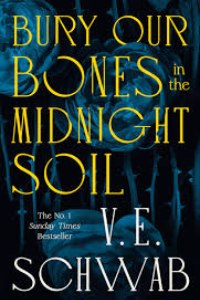
V.E. Schwab, author of New York Times bestseller Bury Our Bones in the Midnight Soil, the hit novel series Shades of Magic, and the creator of Netflix’s queer vampire series, First Kill reiterated in a new interview with Polygon that she believes that all vampires are inherently queer.
“I’ll get so cancelled by somebody for this, I’m sure, but the hill I will die on is, I don’t believe in straight vampires,” she explains. “I think it is antithetical to the underpinning of a vampire, which is essentially a Byronesque, hedonistic form that is interested in experiencing life, interested in experiencing desire, hunger, intimacy, love, whatever it is, in such a way that it doesn’t conform itself, it doesn’t limit itself. So, I have a hard time imagining a straight vampire.”
Published in 2025, Schwab’s dark fantasy novel, Bury Our Bones in the Midnight Soil is a Sapphic story of three women turned to vampires, sinking their teeth into love, lust and power; their sexuality becoming freer as their undead status releases them from societal norms. It is one of a flurry of LGBTQ+ vampiric tales published this year that also includes: Patrice Caldwell’s debut YA novel Where Shadows Meet; Kat Dunn’s Carmilla-inspired novel Hungerstone; Kiersten White’s reimagining of Bram Stoker’s Dracula, Lucy Undying; and Cheon Seon-Ran’s Korean bestseller, The Midnight Shift.
“I have a hard time with some of the more recent vampires in pop culture, because for a while there, it got really straight and really sanitized,” Schwab says. “That’s antithetical to me — it feels like, Well, you just wanted the sexy teeth part, but you didn’t actually want any of the things they represent. And vampires, what I love about them, why I will stan for them, is that they represent a direct intersection of horror and romance. And I think for queer identity, especially — but really, for any identity which is not the cultural default — romance has a bit of horror to it, because there is a bodily danger to romance.”
“The original literary vampires represented carnal knowledge,” Schwab tells Polygon. “At their foundation, whether we’re looking at Stoker, [John William] Polidori [author of The Vampyre] Carmilla, vampires represent a defiance of societal gender and sexual norms. They represent a rejection of conformity, of the default, and specifically of heteronormative and prudish structures.”
Schwab particularly points to Sheridan Le Fanu’s Carmilla (1872), which not only inspired Bram Stoker but also Kat Dunn’s Hungerstone. “She represents sex, but she also represents knowledge, power, autonomy, freedom, all of these things,” Schwab says.
It isn’t just modern takes on the vampire that are threaded with queerness either, Anne Rice’s famous Interview with a Vampire for example is deeply queer-coded in its depiction of Louis and Lestat’s relationship.
In an interview earlier in 2025 with Today, Schwab explained that her recently published novel Bury Our Bones on the Midnight Soil was inspired by classic vampire fiction, stating: “If you go back and you look at these classic vampires, they’re inherently queer.”
Speaking to Polygon in December, she adds: “The fear of queerness is the voice inside the house. The people who are saying vampires are wrong, unnatural, ‘It can’t come into the house, it can’t stand daylight, it can’t eat food, it can’t have all of these things, it is an unnatural monster’ — that’s not the monster saying it, right? It’s the humans telling the story. So, one of the reasons I’ve found vampires to be such a wonderful queer allegory is because of the difference between those stories.”