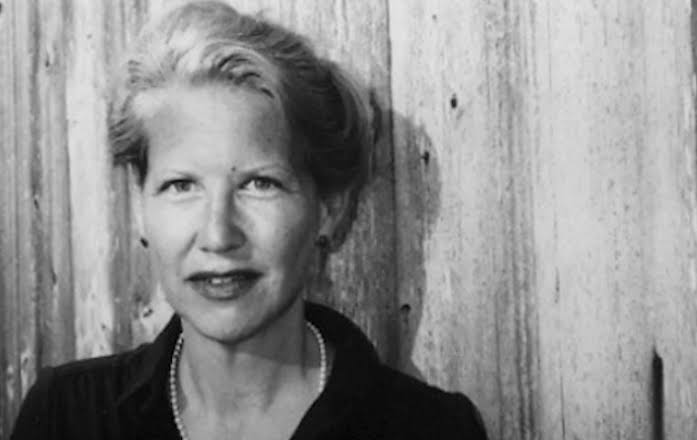
Annie Dillard, the American author whose extraordinary observations of the natural world transformed nature writing into something approaching philosophy, has died.
A Pulitzer Prize-winning essayist, novelist and poet, Dillard was celebrated for her ability to find wonder in the ordinary, to look closely at the world around her and reveal the extraordinary things most of us walk straight past.
Her writing explored the relationship between humanity and nature, the mysteries of existence, and the beauty and brutality of the living world. For generations of readers, she offered a different way of seeing: one that demanded attention, curiosity and a willingness to be astonished.
A life spent paying attention
Born in Pittsburgh, Pennsylvania, in 1945, Dillard studied English and religion at Hollins College in Virginia. Her fascination with the natural world and the questions it raised would become the foundation of her literary career.
Her breakthrough came with Pilgrim at Tinker Creek, published in 1974. Written following a serious illness, the book chronicles a year spent observing the natural world around Tinker Creek in Virginia.
Part nature writing, part spiritual exploration, it examines everything from insects and birds to the vast, often unsettling mysteries of life itself.
The book won the Pulitzer Prize for General Nonfiction in 1975, establishing Dillard as a major voice in American literature.
A writer who taught us to see
Dillard’s literary career extended far beyond the book that made her famous.
In An American Childhood, she revisited her upbringing in Pittsburgh, exploring the development of a young mind discovering the world.
The Writing Life offered readers an intimate examination of the creative process, including the discipline, frustration and occasional exhilaration of putting words on a page.
Her other works included Teaching a Stone to Talk, Holy the Firm, The Living and The Maytrees. Across poetry, essays, memoir and fiction, she returned repeatedly to the same fundamental questions: what does it mean to be alive, and how much of the world do we really see?
Dillard also spent more than two decades teaching at Wesleyan University, sharing her love of literature with new generations of writers.
The legacy of Annie Dillard
Perhaps Dillard’s greatest literary gift was her ability to make readers reconsider the familiar.
A creek was never simply a creek. A moth was never merely an insect. In her hands, the smallest details of the natural world became invitations to consider the enormous questions of existence.
Her writing could be beautiful, unsettling, funny and fiercely intelligent, sometimes within the same paragraph.
She understood that nature was not simply a comforting backdrop to human life. It was strange, indifferent, magnificent and endlessly deserving of our attention.
For readers who discovered her through Pilgrim at Tinker Creek, and for writers who found encouragement in The Writing Life, her books remain an invitation to look more closely.
Annie Dillard leaves behind a body of work that reminds us how extraordinary the ordinary world can be, if only we take the time to notice it.