A Syrian man who concealed hundreds of treasured books behind a wall before fleeing his homeland has returned 15 years later to discover that his entire collection survived the civil war.
In a remarkable story of survival, an elderly man known as Abu Bilal has been reunited with the library he feared he might never see again.
A library hidden from the world
In October 2011, as Syria descended into civil war, Abu Bilal faced an impossible decision. He needed to leave his home in Homs, but his family’s collection of religious books, manuscripts and scholarly works was too precious to abandon to possible destruction.
Rather than leave the books exposed, he built a false wall inside his home, carefully sealing hundreds of volumes behind concrete and cardboard. Only when the library was safely concealed did he agree to leave Syria.
He fled to Kuwait, where he would spend the next 15 years.
Fifteen years later, a hammer and a homecoming
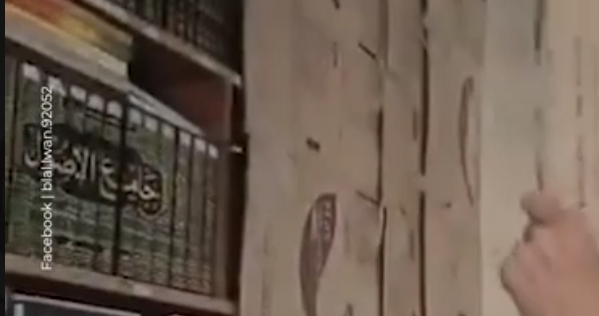
Following the fall of Bashar al-Assad’s government in December 2024, Abu Bilal was finally able to return to his homeland. In footage shared by his son, Bilal Alloun, the elderly man can be seen taking a hammer to the wall he built all those years ago.
As the concrete falls away, the shelves begin to emerge. There are hundreds of books, still neatly arranged, their pages and bindings remarkably well preserved.
Among them are biographies of the Prophet Mohammed, works of Islamic scholarship and a complete set of Jami’ al-Usul fi Ahadith al-Rasul, a medieval collection of religious texts.
He also discovers prayer beads, certificates from his years of religious study and money that had been hidden alongside the books. Apart from a little dust, almost everything is exactly as he left it.
More than just books
The footage has resonated with Syrians across the world, many of whom have their own stories of libraries lost to war, fire, displacement and destruction Some shared memories of collections they had been forced to abandon. Others recalled books that had been burned or damaged beyond repair.
For Abu Bilal and his family, the discovery represents something much greater than the recovery of a private library.
It is the return of a lifetime of learning, faith and memories that survived 15 years of uncertainty.