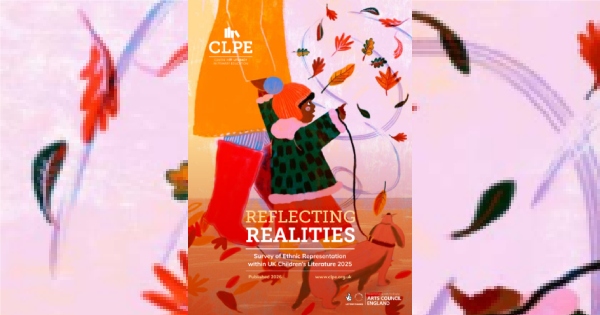
The ninth annual ‘Reflecting Realities’ survey from the Centre for Literacy in Primary Education, (CLPE) reveals the highest levels of racially minoritised representation recorded since the research began. The research into Ethnic Representation within UK Children’s Literature funded by the Arts Council England and published in November this year noted, however, that racially minoritised main characters remained unchanged at 24%, despite the substantial increase in overall representation.
The research adds that, while this is a significant improvement on the 1% reported in the first survey (published 2018), “the finding raises important questions about the extent to which racially minoritised characters are being positioned at the centre of the story worlds they inhabit.
To obtain data, this year’s survey analysed, with the support of NielsenIQ BookData, 1,909 eligible children’s books, of which 833 featured racially minoritised characters. In their key findings, CLPE reveal that 44% of children’s books published in 2025 featured racially minoritised characters, the highest figure recorded in the history of the research series. The organisation marks this increase from a baseline of 4% in 2016 as a major milestone as CLPE approaches a decade of data on ethnic representation in children’s literature.
But, they also state that the proportion of books featuring a racially minoritised main character remained static at 24%, “highlighting the importance of continuing to examine not just visibility but positioning and agency within stories.”
Farrah Serroukh, Executive Director of Research and Development at CLPE, said: “This year’s findings mark an important milestone. We are reporting the highest levels of representation recorded in the history of this research series showing what is possible when the industry commits itself to meaningful change.
“At the same time, these findings remind us that representation is about more than presence alone. The quality of representation, the positioning of characters and the sustainability of inclusive publishing practices remain just as important as headline figures.
“As we approach ten years of Reflecting Realities, we hope the industry takes a moment to recognise how far it has come while continuing to invest in the infrastructure, talent and sustained commitment needed to ensure that inclusive literature remains a central and enduring part of children’s publishing.”