Every generation seems fascinated by the same unsettling question: what if the world isn’t really run by the people we see?
From masked gatherings of the ultra-wealthy to sprawling conspiracies linking powerful organisations across centuries, fiction has long explored the fear that influence, privilege, and corruption often operate behind closed doors. And whenever real-world scandals or revelations dominate public conversation, these stories feel especially chilling, not because they claim to be true, but because they tap into a very human suspicion that power sometimes protects itself.
Secret society fiction sits in a particularly fascinating corner of literature. It blends psychological tension, political intrigue, and moral unease, asking readers to consider what might happen when wealth, influence, and secrecy collide.
If you’re drawn to stories about hidden networks, elite manipulation, and conspiracies that lurk just beneath society’s polished surface, and you’re looking for an escape from the absolute horrors that are real life revelations right now, these books offer some of the most compelling, and disturbing, explorations of the theme.

Dream Story (Traumnovelle) — Arthur Schnitzler
Often overshadowed by its famous film adaptation Eyes Wide Shut, Schnitzler’s original novella remains one of the most unsettling portrayals of elite secrecy ever written.
The story follows a respectable Viennese doctor whose life begins to unravel after his wife confesses to a fleeting but intense fantasy about another man. Shaken, he embarks on a surreal night-time journey through Vienna that leads him to a mysterious masked gathering attended by the wealthy and powerful. What he witnesses there suggests a secret world operating far beyond conventional morality — one where status and privilege shield participants from consequence.
What makes Dream Story so haunting is its ambiguity. Schnitzler never fully reveals the structure or purpose of the secret society, instead focusing on the psychological terror of glimpsing a hidden hierarchy that appears both omnipotent and untouchable.
The novella’s dreamlike atmosphere makes it feel less like a thriller and more like stepping into a subconscious fear about how power might truly function.
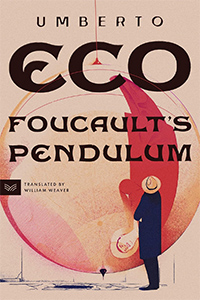
Foucault’s Pendulum — Umberto Eco
If there is a definitive novel about secret societies and conspiracy culture, this is arguably it.
Eco’s complex and brilliant novel follows three editors working at a publishing house specialising in occult and conspiracy manuscripts. Initially amused by the outlandish theories they encounter, they decide to invent their own grand conspiracy as an intellectual game — weaving together fragments of history, secret orders, and coded messages into a fictional master plan supposedly linking organisations such as the Knights Templar and Rosicrucians.
But the joke spirals dangerously out of control.
As others begin to believe the fabricated conspiracy is real, the editors find themselves trapped in the very web they created. The novel becomes a chilling examination of how easily patterns can be forced onto history — and how quickly belief can transform fiction into something deadly.
While intellectually demanding, Foucault’s Pendulum is a fascinating exploration of humanity’s enduring obsession with hidden power structures and secret rulers.
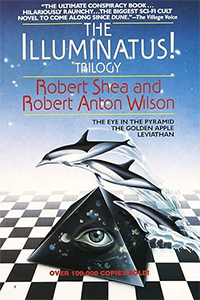
The Illuminatus! Trilogy — Robert Shea & Robert Anton Wilson
If Eco’s novel is philosophical and intricate, The Illuminatus! Trilogy is its chaotic, countercultural cousin.
This cult classic throws readers into a wild narrative featuring rival secret societies, global conspiracies, and a sprawling network of organisations all competing for control of the world. The story deliberately blurs fact, satire, and absurdity, creating a reading experience that feels intentionally destabilising.
Wilson and Shea use humour and surreal storytelling to explore how conspiracy theories spread, evolve, and entangle themselves with politics, religion, and pop culture. Beneath the madness lies a surprisingly sharp commentary on authority, paranoia, and the nature of belief itself.
For readers who enjoy ambitious, unconventional storytelling — and aren’t afraid of a little narrative chaos — this trilogy offers one of the most entertaining explorations of secret elite control ever written.
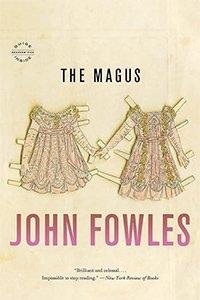
The Magus — John Fowles
Moving away from global conspiracies and into more intimate psychological manipulation, The Magus explores what happens when immense wealth and influence allow one man to construct an elaborate private world of control.
The novel follows Nicholas Urfe, a young Englishman who accepts a teaching position on a remote Greek island. There, he becomes entangled with the enigmatic millionaire Maurice Conchis, whose vast resources allow him to stage increasingly elaborate psychological “games”. As Nicholas is drawn deeper into Conchis’ world, the boundaries between performance, manipulation, and reality collapse.
While the secret society element here is less overt, the novel presents an elite individual wielding extraordinary power over others, protected by wealth and isolation. The result is a deeply unsettling examination of how privilege can enable moral experimentation without accountability.

The Secret History — Donna Tartt
Donna Tartt’s modern classic offers a quieter but equally disturbing portrait of elite secrecy.
Set within an exclusive group of classics students at a prestigious American college, the novel follows an outsider who becomes drawn into their rarefied intellectual world. Their obsession with ancient philosophy and ritual gradually leads them to commit an unthinkable act — and to construct a carefully guarded secret to protect themselves from exposure.
Unlike traditional secret society thrillers, The Secret History focuses less on global conspiracies and more on the psychology of privilege, exclusivity, and moral detachment. Tartt masterfully explores how intellectual elitism and social insulation can create environments where individuals begin to believe they exist above ordinary ethical boundaries.
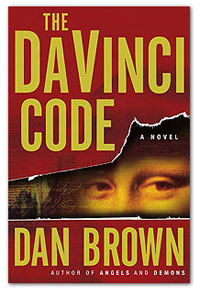
The Da Vinci Code — Dan Brown
Few modern novels have brought secret society fiction into mainstream popular culture quite like Dan Brown’s blockbuster thriller.
The story follows symbologist Robert Langdon as he uncovers a trail of clues suggesting that ancient secret organisations have spent centuries guarding hidden historical truths. Packed with puzzles, religious symbolism, and shadowy orders operating across generations, the novel captures the enduring allure of secret knowledge controlled by powerful groups.
While written primarily as fast-paced entertainment, The Da Vinci Code demonstrates just how compelling secret society narratives remain for modern readers, blending historical speculation with high-stakes intrigue.
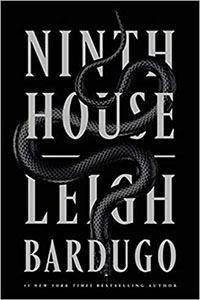
Ninth House — Leigh Bardugo
Bringing the secret society tradition firmly into contemporary fiction, Bardugo’s dark fantasy introduces readers to a hidden world operating beneath the surface of elite academia.
Set at Yale University, the novel reveals that the institution’s prestigious societies secretly practise dangerous occult rituals. The story follows Alex Stern, a troubled student recruited to monitor these groups — only to discover that their influence stretches far beyond campus traditions.
Ninth House combines supernatural horror with sharp commentary on wealth, privilege, and the protection afforded to powerful institutions. It modernises classic secret society tropes while retaining the unsettling question at the heart of the genre: who is truly held accountable when power operates in the shadows?
Why Secret Society Fiction Never Loses Its Power
Stories about hidden elites have existed for centuries, evolving alongside society’s changing fears about authority and corruption. From aristocratic salons in early European literature to modern corporate and academic conspiracies, these novels reflect a persistent cultural anxiety: that influence often operates in ways ordinary people never fully see.
Part of the genre’s enduring appeal lies in its ambiguity. These stories rarely offer simple answers. Instead, they explore how secrecy, privilege, and unchecked authority can create environments where morality becomes dangerously flexible.
Whether written as satire, psychological drama, or fast-paced thriller, secret society fiction reminds us that power and transparency have rarely existed comfortably side by side.
And perhaps that is why, whenever real-world headlines raise uncomfortable questions about influence and accountability, readers inevitably return to these stories, searching not for proof, but for understanding.
7 Books That Explore Worlds Run by Corrupt Elites (And Why They Feel So Relevant Right Now)
FRA Book of the Year 2025 – plus the top ten (As Voted by You)
Storygraph vs Fable: Breaking up with Goodreads
Pride Power List: In Books

7 alternative reads for trans allies instead of Harry Potter

For Reading Addicts Book of the Year 2024