For many readers, it sounds like the plot of a dystopian novel.
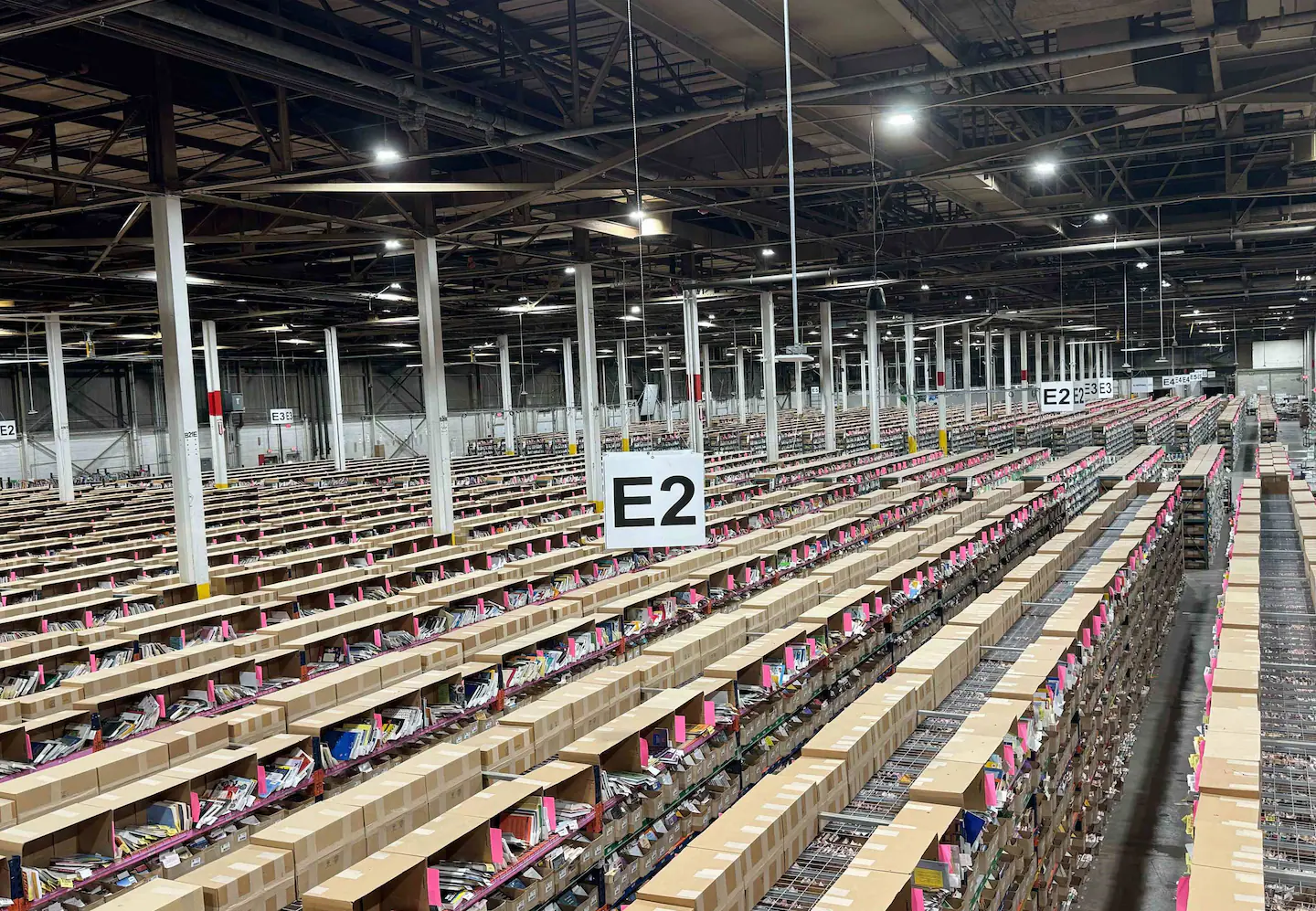
Artificial intelligence companies are buying books by the million, cutting the bindings off, scanning every page, and then throwing the originals away.
If you’ve seen headlines claiming that AI is “shredding rare books”, you might be wondering whether this is sensationalism or whether it’s actually happening.
The answer is both more complicated and more concerning than you might think.
Yes, Books Are Being Destroyed
One part of the story is no longer in dispute.
Court documents made public during copyright lawsuits against AI companies revealed that at least one major company, Anthropic, legally purchased millions of printed books, removed their bindings using industrial scanners, digitised every page, and then discarded the physical copies.
The process is known as destructive scanning. It’s exactly what it sounds like: the spine is cut off so that loose pages can be rapidly fed through high-speed scanners.
The result is a perfect digital copy, but a ruined book.
Ironically, libraries have used destructive scanning for decades when preserving fragile texts, but their goal has generally been to save information that might otherwise be lost. The purpose here is quite different: creating enormous datasets to train artificial intelligence.
But Are They Really Buying Rare Books?
This is where many headlines become less precise.
There is growing evidence that AI companies and the contractors working for them have been purchasing huge numbers of out-of-print and difficult-to-find books from second-hand booksellers around the world.
Booksellers have reported receiving shopping lists containing hundreds or even thousands of obscure titles. Some of those books are genuinely rare. However, out of print does not necessarily mean rare. Many books are no longer printed simply because demand has disappeared. Others exist in only a handful of surviving copies.
At the moment, there is good evidence that scarce and obscure books are being purchased. There is much less evidence that companies are systematically buying museum-quality rarities or unique first editions simply to destroy them.
That’s an important distinction.
Why Not Just Use the Internet?
The obvious question is: why would an AI company spend millions buying physical books when the internet already contains billions of pages of text?
Ironically, the internet has become one of AI’s biggest problems.
As AI-generated articles, blog posts and websites multiply, the web becomes increasingly polluted with text written by… AI.
Researchers have warned about something called model collapse, where future AI systems learn from previous AI-generated content rather than original human writing. The result is a gradual decline in quality, originality and factual reliability.
Books, particularly those published before the explosion of generative AI, offer something increasingly valuable: large collections of carefully edited, entirely human-written text.
For training language models, they’re a goldmine.
The Ethical Questions
Even if every book has been legally purchased, many people remain deeply uncomfortable with the practice. Authors argue that their work is being used to build products worth billions of pounds without their permission or compensation. Booksellers worry that obscure works are quietly disappearing from the second-hand market. Librarians fear that privately owned digital archives could eventually become more comprehensive than public collections. Readers, meanwhile, often feel something more emotional.
A book is not simply a container for information. It is an object that survives generations. It carries history, annotations, inscriptions, coffee stains, pressed flowers and forgotten train tickets. It sits on shelves waiting to be discovered by someone decades later.
Destroying millions of books, even after preserving their text, feels fundamentally different from simply making a digital copy.
A Strange Irony
Perhaps the strangest part of the story is this:
Artificial intelligence has become so widespread that the internet is becoming less useful for training artificial intelligence.
To build the next generation of AI, companies are increasingly turning not to the future, but to the past, to printed books written long before anyone imagined machines capable of reading millions of them in a single day.
Books, once seen as old-fashioned technology, have become one of the world’s most valuable sources of human knowledge.
That is both reassuring and unsettling. Because while it demonstrates the enduring value of books, it also raises a difficult question: If our books are valuable enough to train artificial intelligence, shouldn’t the people who wrote them, and the cultural heritage they represent, be treated as valuable too?
Humans seem to be facing so many dilemmas and threats at the moment, and the source from many of those threats seem to point to the same thing, capitalists who want to shape the future, and maybe that’s the real issue here.